Showing posts with label Saee Nasikkar. Show all posts

Saturday, April 1, 2017

Three Mile Island

The Three Mile Island was a partial nuclear meltdown accident, that occurred on March 28, 1979. The nuclear plant was located in Dauphin County, Pennsylvania. This and other incidents, such as the Love Canal Disaster, spread awareness about the harms of nuclear waste in the environment.

Image result for 3 mile island old


Image result for 3 mile island explosion

The accident at Three Mile Island was caused due to failures in the non-nuclear secondary system, which caused large amounts of nuclear reactor coolant to escape. It was only partial because only one of the reactors had a failure on the entire Three Mile Island Generator. For short, the reactor was called TML - 2. 


Image result for 3 mile island accident


Considered the most significant accident in the US nuclear power plant history, this incident formed worries in the minds of the general public and environmental activists. This also forced new safety regulations to be made concerning nuclear plants. 


President Carter signed into law a stricter federal safety standards, including, mandatory emergency evacuation plans and harsher penalties for violations of federal safety standards. He also required plants to hire inspectors and set up a strict training program for them. As the budget increased, so did the inspectors. 


Image result for 3 mile island protesters


Activists, mainly environmentalists and people who had been affected by similar incidents, attacked the TMI and its carelessness. They filed a suit in 1981 against the TMI, winning $25 million. They used this to create the TMI Public Health Fund. 


Today, this plant still operates, but with better safety regulations and stricter policies. The second reactor lays unused since the accident, but the first reactor is still functional. 

Image result for 3 mile island

Sunday, March 19, 2017

Rachel Carson

During the 1960s, the civil rights movement had encouraged other movements, such as women's rights, homosexual rights and environmentalism rights, to come out and face problems. One of the activists who initiated a movement was Rachel Carson. 

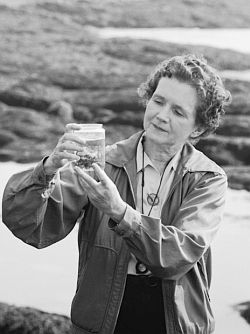
Image result for rachel carson

Rachel Carson was born on May 27, 1907 on a family farm in Pennsylvania. She had enjoyed nature and writing stories since a young age and had her first story published in St. Nicholas Magazine, a local magazine, when she was ten. She began her career as a marine biologist at the U.S Bureau of Fishing, and later on pursued a career as a writer in the 1950s. 


Image result for rachel carson


Carson wrote while she was a marine biologist, with her first three books, Under the Sea-Wind (1941), The Sea Around Us (1951), and The Edge of the Sea (1955). These books talked about her underwater research and geologic discoveries from submarine technologies, some topics being: how islands were formed, how temperature affected sea life, or how currents changed and merged. All her book contained, to some degree, how the environment was affected by chemicals or climate change, but not until her fifth book did she question chemicals and people advocating for them openly. 


Image result for silent spring


Her book Silent Spring was written in 1962, the beginning of the environmentalism movement. It warned people of the dangers from misuse of chemicals, such as DDT, and other scientific technologies that would potentially harm the environment. In her book, she questioned whether humans had the right to control nature and control who died and lived. She believed that because of pesticides such as DDT was killing human through a cycle where, the chemicals would go into the soil, water and plants, in turn infecting fish, that would be eaten by humans. 


Image result for protest against rachel carson


Many groups protested against this, mainly being farmers and chemical producing factories, because this would come out of their income. She was attacked in many ways, including labeled a communist because she was taking away jobs. But, as the movement faded, others started recognizing environmental problems such as pollution and climate change, continuing the environmental movement. 


Sources: www.rachelcarson.org

Saturday, March 11, 2017

Freedom Riders


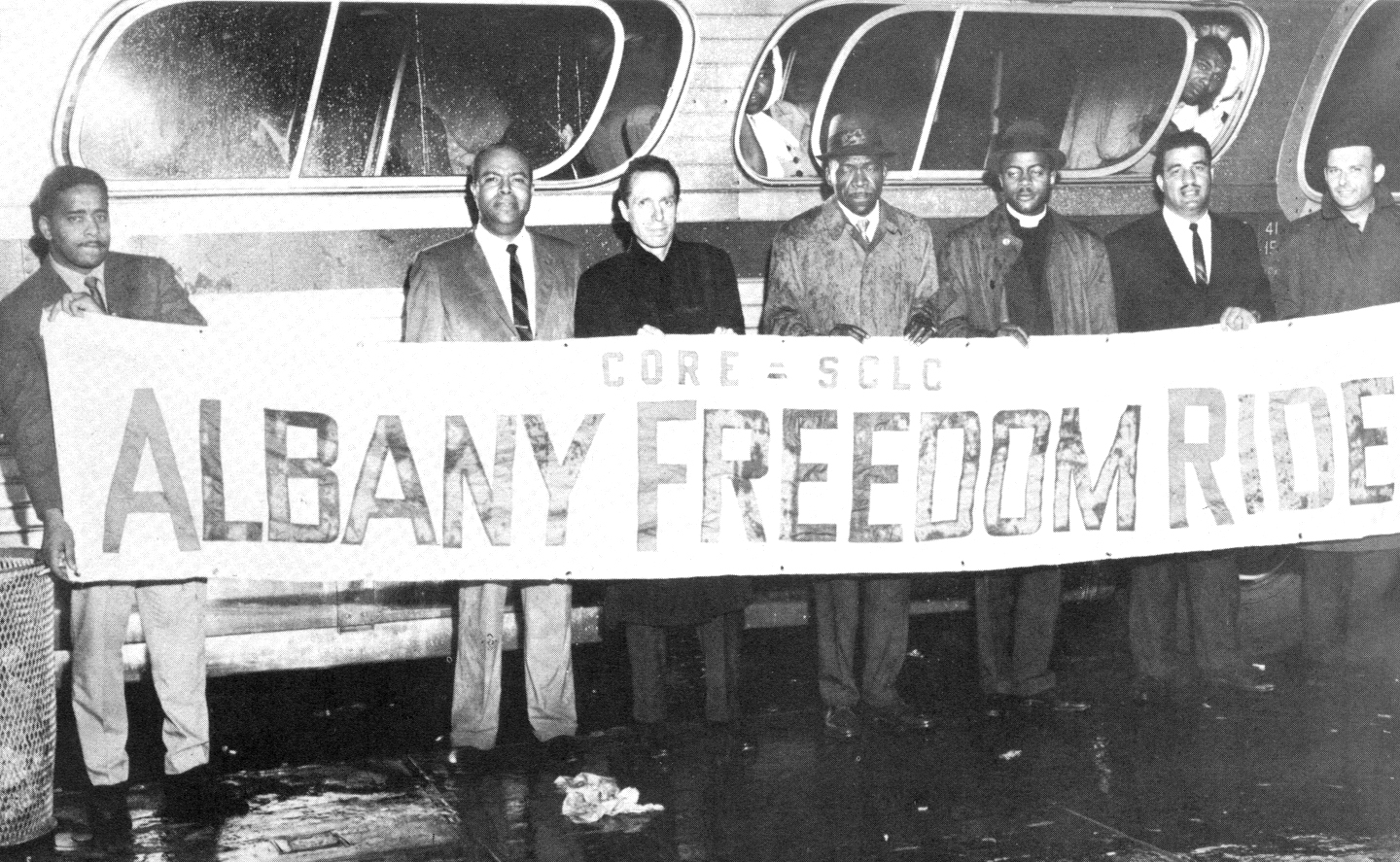
The Freedom Rides movement was one of the prominent parts of the civil rights movement. The goal of the freedom riders was to challenge the Supreme Court's decision about cases Morgan v. Virginia and Boynton v. Virginia. The ruling of these cases was that segregated buses were unconstitutional. Although the ruling was in favor of the movement, the Southern States did not desegregate their buses. 

Related image


Image result for freedom riders
The Freedom Riders were civil rights activists, who rode segregated buses deep into the south to peacefully protest against their decision about segregation of buses. This included both black and white passengers. The first freedom ride left Washington D.C on May 4th, 1961, with 13 passengers (7 black and 6 white) in two buses, Greyhound and Trailways. They arrived as scheduled in New Orleans in May 17. 


Image result for CORE freedom riderThe riders organized themselves in such a way that it would provoke the onlookers and would get them arrested. One black rider always sat in the front seat, a seat that was usually reserved for white passengers, while the other would be scattered over the bus. One black rider would always sit in the back, so that if the riders were pulled over and arrested, he would be able to call the organization (CORE) and arrange for bail. 


But, not all the rides were as peaceful as they were meant to be. The freedom riders didn't meet much trouble in Virginia, but the riots and mobs in Winnsboro, Charlotte, Jackson, Birmingham and Anniston, were where the riders would meet violence and anger of the south. 

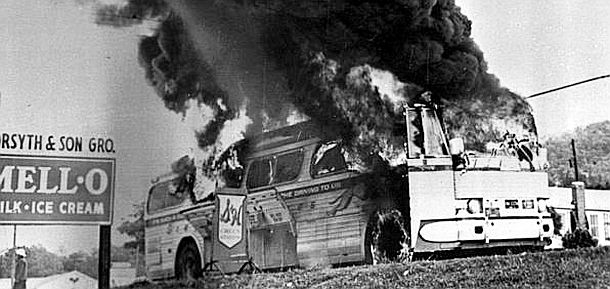
The first of the buses would encounter their first problem at Anniston, Alabama. When the first bus (the Greyhound) reached Anniston on Mother's Day, May 14th, an angry mob of southerners attacked. The driver tried to leave the station, but the bus' tires were slashed. Later, the mob set fire to the bus several miles away from the station. Luckily, a distraction occurred, that caused the mob to retreat and allowed the riders to escape. An hour later, the second bus (the Trailways) reached Anniston. Here, 8 Klansmen boarded the bus, and beat the riders semi-conscious, leaving them at the back of the bus. 

Related image
Image result for freedom riders
These were just a couple of the attacks on the freedom riders. Later the mob would attack several buses at Birmingham and Montgomery. Where the mob didn't attack, the riders were arrested by local law enforcement and kept in jail until they could be bailed out. 


A very dangerous movement, this was crucial to the civil rights movement as the riders would gain moral support from those who could see how peaceful protesters were being treated with violent force. 

Monday, March 6, 2017

The Paris Peace Accords

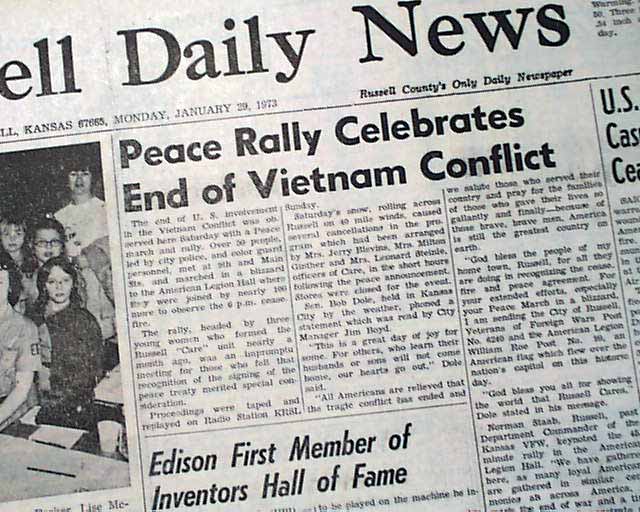
The Paris Peace Accords was a peace treaty between the US government, North Vietnam, South Vietnam, as well as the Provisional Revolutionary Government (the Vietcong), that represented the South Vietnamese revolutionaries. This treaty was signed on January 27th, 1973 to end the war between Vietnam and the US.

Image result for paris peace accords nixon

Nixon and both North and South Vietnam leaders met in Paris to sign the agreements that ended the war. Even though, the meeting was between all three leaders, the main agreements were made between the US and North Vietnam. This was done because the South had a crumbling government and therefore much of the South was left under the Northern troops control by Nixon, so that he could withdraw American troops as soon as possible. This process was termed "Vietnamization", where the responsibility of the war would be given to Vietnam, so that the US troops could be withdrawn. 

Image result for paris peace accords nixon


Image result for paris peace accords nixonThe agreements made in the formal document were as follows:
1. A cease-fire throughout Vietnam. 

2. US agreed to withdraw all US troops and advisers and dismantle all bases within 60 days. 

Image result for paris peace accords3. North Vietnam agreed to release all the US and other prisoners of war. 

4. Both sides agreed that the demilitarized zone (DMZ) at the 17th parallel would still be the dividing line between the North and South. This would remain until peaceful arrangements were made. 


5. The North Vietnamese also agreed that they would not initiate military movement over the DMZ and there would be no force made to reunite the two parts of Vietnam. 

6. The South Vietnamese agreed to President Nguyen Van Thieu remaining in office, pending the elections. 


Wednesday, March 1, 2017

The Kennedy Family


During the election campaigns of John F. Kennedy and Richard Nixon, Kennedy was very appealing to the people. He had a charming face and a charisma that gave him an advantage over Nixon. Many thought of him as a family man, which made him more approachable. He was married and had two kids when he began his presidency.

Kennedy's wife was Jacqueline Lee "Jackie" Kennedy Onassis. They were married on September 12, 1953. She was married to Kennedy until his assassination in 1963 and later married Aristotle Onassis in 1968 until his death. 

Image result for jackie kennedy

JFK and his wife had three children: Caroline, John, and Patrick. They also had a stillborn, who was to be named Arabella, born a year before Caroline. 

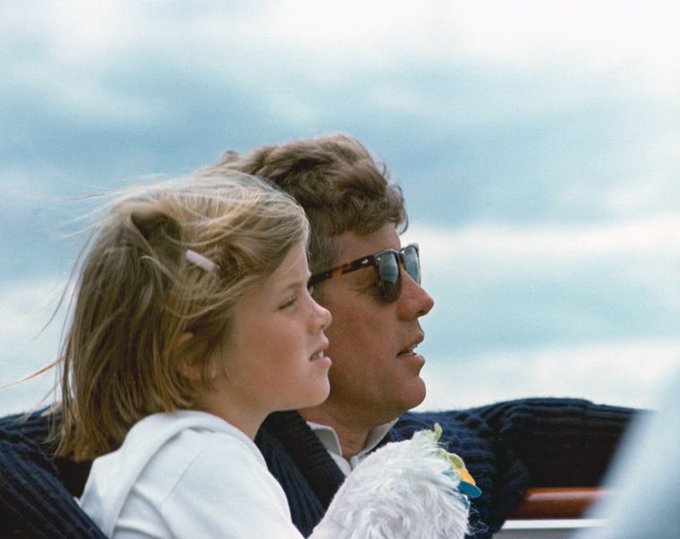
Caroline Kennedy is their oldest daughter, who was born on November 27, 1957. She was three when her father was elected and lived in the White House until she was six. She was pampered with gifts from dignitaries, which included a puppy from Khrushchev and a pony from Johnson. 

Image result for small caroline kennedyImage result for caroline kennedy


John F. Kennedy Jr. was their second son who was born on November 25, 1960, two weeks after the election. He lived in the White House for three years and was the first child ever born to a president-elect. He died on July 16, 1999, in plane crash in the Atlantic Ocean. 

Image result for jfk jr


Patrick Kennedy was born on August 7, 1963. He was the last child of John F. Kennedy and Jacqueline Kennedy. He died on August 9, 1963, due to a premature birth and a condition called hyaline membrane disease, now known as infant respiratory distress distress syndrome. 

Gravestone for Patrick Bouvier Kennedy in Arlington National Cemetery.jpg

Wednesday, February 15, 2017

Family LIfe in the 1950s

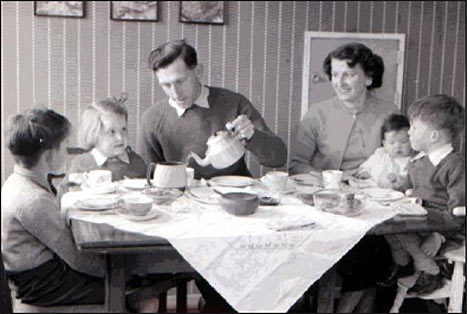
The 1950s were a resurgent of traditional family values. The soldiers were back from the war and many began to go back to their traditional lifestyles. After the war, there were more white-collar job than blue-collar jobs for the first time, and this enabled ore money to flow and a consumer society to emerge. 


A traditional value that emerged after the war was that most of the war industrial women went back to their previous, domestic lives. Their main goal was to raise and take care of the family at home, while the men brought in the money for their needs. The money flow was booming because of the jobs and this allowed consumer demand to grow as more people wanted more stuff. 


Values and ethics among the younger generation also changed. The parents taught their kids to be very respectful and obedient. They were also independent, as their parents had no intention of spoiling them. They spent a lot of time with their family and had close relationships with everyone. This era was change for the youth because of the many cultural movements, such as rock and roll and other new ideas began to emerge. It made the youth more distant from their families and more independent. 


The society and media were two of the most contributing factors of these changes in family life. Better jobs meant a better pay, and this brought in more things such as kitchen appliances, electronics and cars, things were once not affordable. Shows such as Leave it to Beaver, I Love Lucy, and The Ed Sullivan Show were some that influenced and portrayed the family life and their values and ethics, that were reflected among families in real life. 


Sunday, February 5, 2017

NATO and The Warsaw Pact

NATO and the Warsaw Pact were collective defense treaties, both formed during the Cold War. Here's a little background on both alliances and their purposes. 

NATO (North Atlantic Treaty Organization) or OTAN (Organisation du Traite de l'Altantique Nord) is an intergovernmental military alliance, signed on April 4, 1949. Three of its members, the US, France and UK, are the permanent members of the UN Security Council. This gives them the power to veto any decision that the UN makes. It consists of 28 members, mostly from Europe and North America. Its headquarters today are located at Haren, a municipality in Brussels, Belgium. 

NATO was formed in defense against the Soviet Union and its allies during the Cold War.
After the World War II ended, there were still many tensions between the Soviet Union and America, as they emerged as the two "superpowers", with nuclear weapons and manpower. An alliance among the United States and Europe was necessary for Stalin's defeat in the Cold War.


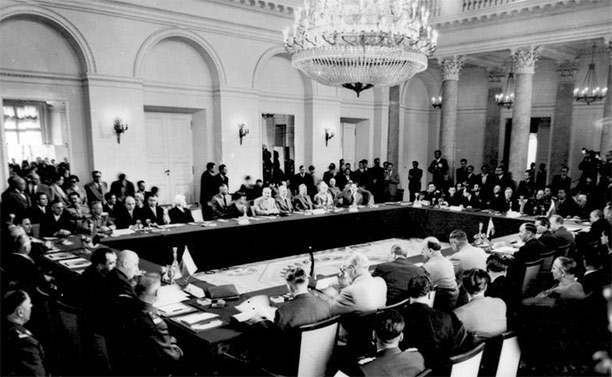
The Warsaw Pact was a collective defense treaty between the Soviet Union and 7 other Soviet satellite states in Eastern and Central Europe. It was formed during the Cold War and signed into existence on May 14, 1955 at Warsaw, Poland. The treaty was based on a communist belief as the states were under the control of Stalin and had no choice but to join the alliance. 

Later in 1990, East Germany and Poland withdrew from the pact. In February 25, 1991, a meeting of the remaining 5 states at Hungary decided the end of the Pact. It was officially dissolved on July 1, 1991, and the USSR itself dissolved in December 1991. In the next 20 years, the remaining states would join NATO. 

Wednesday, January 25, 2017

Art During The World War II

Art during war throughout history had been portrayed as heroic and glorified. This 19th century war was a turning point in art history during wars. Artists began showing the blood
baths and the disastrous effects of the war. Many also showed air combat and infantry in action to make the people understand that war wasn't as glorious as they thought it was. 

This change in artistic techniques and themes came about by the concept of 'change'. This concept was an important aspect of all social events during the World War II. Change in women's roles, change in racial problems, change in everything. Artists decided that this was a new era, and that they could not create art that was influenced by traditional renaissance techniques. 

Art was a form of imagination, which can be influenced by social change around you. The art changed in many forms. 

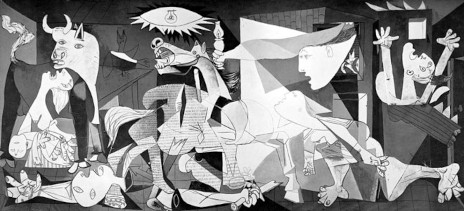
Pablo Picasso's 'Guernica'
It became more realistic and horrified, though the realism was portrayed in abstract forms. This was because of the experiences that the author had had, either fighting in war, hearing from people who fought, or even losing friends and family due to the war. Some examples of abstract artists were Jackson Pollock, Mark Rothko and Pablo Picasso. 


Art became more diverse. Instead of traditional paintings and drawings, artists made collages and models. This type of art was influenced by the resources around them. Because many goods were rationed, the artists used what they could get. Jackson Pollock, an abstract artist, began this new style of 'drip and splash'. Instead of using a traditional paintbrush method, he would drip the paint from the can onto the canvas, and then later uses knives and sticks to give it depth. This new form of abstract art portrayed a moving picture of the war in some cases. 

Jackson Pollock's 'Lavender Mist'

Another form of art that prevailed heavily during the war was propaganda. This form of art was mainly made for people to help the war effort and to create hatred among the Americans, against the Nazis and Japanese. There were different kinds of propaganda that appealed to different groups of people also.


Monday, December 5, 2016

Hoover's Reconstruction Finance Corporation (RFC)

During Hoover's presidency, the financial state of American wasn't that great. Hoover tried to help the banks without it seeming that the government was interfering. He did this because his ideals included voluntaristic and nongovernmental approaches. This meant that he didn't support government interference in financial and social problems. His first solution was the National Credit Association, which was a pool of private bankers, who were urged to create $500 million in credit to support weaker institutions and banks. This failed terribly, as one by one the banks started withdrawing.

Later, he created the Glass - Steagall Act of February 1932. and the Federal Home Loan Bank Act of November 1931. Both of these acts had the purpose of thawing millions of dollars frozen in assets. Unfortunately, even though Congress supported him reluctantly, they weakened his bill by including additional security requirements. This delayed the passage of the Federal Home Loan Bank Act to July 1932.

The Reconstruction Finance Corporation was by far the most effective and widely liked solution that Hoover came up with. It was based on the War Finance Corporation, which financed military plants. The RFC completely went against his ideals, but made sure that the weak institutions were getting the support they needed. 

Basically, the RFC made taxpayers' dollars directly available to private financial institutions that needed support. To begin the process, Congress gave $500 million to the RFC and authorized it to borrow $1.5 billion besides than amount. This allowed it to give loans to banks, building-and-loan societies, railroads and agricultural stabilization corporations.

There were two reactions to the passage of this bill.

One half of the people were hopeful and glad for this bill because of the financial support it was giving them. But that wasn't the only reason. They wondered that if Hoover had interfered with the financial system, and gave them 'bank relief', wouldn't he do the same for the unemployed and give them jobs?

Unfortunately, not many people were happy with this bill either. The supporters of Hoover and his ideals were upset about his interference because he had always described himself as believing that, "the government is best which governs least". They feared that if he stepped over this idea, what would stop him from interfering with everything?

Sadly, the most torn between these two was Hoover himself. He had only done what was needed to be done, which went against him. He couldn't decide either to be happy about the financial state or to be sad about his interference in the economic system.

Wednesday, November 30, 2016

Roosevelt's Fireside Chats

During the depression, many relied on entertainment such as movies, sports and most common and cheapest of all, radio. Anyone who had owned a radio before the crash could listen for free. Franklin D. Roosevelt was the first democratic president to be elected in 12 years. He had ideas of reform and sought to help people in the depression. One his most famous was the New Deal, which was a series of social liberal programs including laws passed by both Congressional and and presidential executive order.

To spread his idea throughout the country, Roosevelt would use radio broadcasting. Almost every house and every store had a radio and this enabled everyone to listen to his ideas. These broadcasts were called fireside chats. Roosevelt gave his first speech from behind his desk on May 7, 1933 and 10 PM eastern time. The term 'fireside chat' was a CBS reporter, Harry Butcher's idea of the talk. It later became popularized because of the warm and informal feel that the radio broadcasts invoked. It helped the people relax and enjoy the chat as if they would be sitting next to the fire and talking to him in person. Basically, it changed the people and their attitude towards life during the Great Depression. they began to have hope for a better future. 


He used many different methods to make his chats more interesting to listen. He would use dramatization and rhetoric to divert the people's focus and give them a morale boost. He had many scriptwriters for his talks, but his was very actively involved in creating them. He insisted on invoking the legacies of the Founding Fathers and willed the people to have faith and hope in God or Providence. 

Thursday, November 24, 2016

Social life during the Great Depression

The Great Depression was an extremely large national crisis that brought despair to people just about when they were starting to change their lives. Socially, the depression was a burden just as it was politically or economically. the crime rate in cities went up uncontrollably. Many unemployed workers would commit petty theft to bring food to the table. Not only did the crime rates but the mortality rates weren't far behind. Most cases were malnutrition for the unemployed families and suicide for those who couldn't handle the huge money loss. Education also suffered heavily. Universities saw their student body decrease in the first decade of the depression. However, male attendance at high schools. Since their chances of getting a job were low, they decided to stay in school longer. But public school funding went down drastically, causing schools to close down or open understaffed. Marriages were delayed because men had to find a job before they were ready to provide for a family. Birth rates went down as Americans decided that they couldn't afford to have more children to feed.


But as time went on, there were many who decided to make the best of times. Sports were used as one of the major distractions for people. Classics such as The Bride of Frankenstein, Gone With The Wind and It Happened One Night were peoples' favorites. Radio didn't go out trend, as anyone who owned a radio before the crash could listen for free. Many radio celebrities would keep them well informed. Alcohol often helped people drown their sorrows and smoking was more common. The Prohibition Act was repealed in 1933 so drinking was legal and could be sold freely. 


In someway, the depression helped the American society change. Many families united and helped each other. Mass migration decreased the population and reshaped the mosaic that was known as America. Many large businesses perished, while smaller ones grew with stronger with the support of others. There were just as many people who were hopeful as much as there were those who had no hope for the future. 

Monday, November 21, 2016

Prohibition of Alcohol in the 1920s

When the prohibition of alcohol act on January 16, 1920 went in to affect, it not only stopped legal sale of alcoholic beverages. It increased the production of soft drinks and spurred the growth of tea rooms. To find an alternative to alcoholic beverages, people struggled and sometimes had to resolve to working behind the back of the government. Many hotels, restaurants and wine industries closed down. Hotels began serving fruit cocktail cups often garnished with marshmallows or powdered sugar. This replaced fresh oysters on a half shell with champagne at dinner party openers.  The wine industries, unable to sell wine, changed their grapes to juice grapes. Only a small portion of the juice was sold as juice. Most of it was sold as home-brewed wine. It wasn't a very sophisticated viniferous product, but selling the juice this way helped many wine industries get through the prohibition.


Even though alcohol consumption was prohibited, it didn't stop the people from drinking. When the act was passed, only a year after the prohibition had the consumption went down. The consumption of alcohol went up again to its original state. The largest amount of gallons consumed after the prohibition was 1.3 gallons per capital. 


Monday, November 14, 2016

Wilson and his Fourteen Points

Towards the end of the war, Wilson began to draft a statement of principles that would help bring peace in the world and prevent any wars in the future. Originally, Wilson had drafted this statement to end the current war that was prevailing between Germany and the Allies. Germany had agreed to stop the war if a treaty was formed based on the principles of the fourteen points. Wilson was glad, but the document had to be passed by Congress and had to be accepted by the British, French and Italians in order to form a treaty. he presented this to Congress as a solution for the future. He believed that these fourteen points would stop any wars, and bring the world closer to democracy. He described the WWI as "war to end all wars". 


What were the fourteen points about?
The first five were about international issues and concerns, mainly:
  • Open diplomacy 
  • Freedom of the seas 
  • Removal of economic barriers 
  • Reduction of armaments
  • Adjustment of colonial claims. 

All of these points stopped nations from going to war, so that there would be no wars. 

The next eight dealt with territorial questions. They addressed these territorial disputes: 
  • Conquered territories in Russia
  • Restoration of Belgian sovereignty
  • Redrawing of Italian frontiers
  • Division of Austria-Hungary
  • Redrawing of Balkan boundaries
  • Limitations on Turkey
  • Establishment of an independent Poland
These eight points, according to President Wilson, would end any boundary disputes and would satisfy all nations involved. 

The last point was about the League of Nations. This was a league that was proposed by Wilson, but later all nations but the U.S would join because the Senate had not approved of this document. The idea of the League of Nations was that all the nations that would join would have the duty of supporting each other when one was in danger. This would prevent other nations from attacking the League and anyone involved in it because they would have no support. 

Unfortunately, Congress didn't like the way that Wilson had taken the draft of the fourteen points to France without consulting them on it first. Later, when he would come back, he would find that Congress would do anything to oppose the US joining the League, and Wilson would not be able to fight back. 


Thursday, November 3, 2016

The 17th Amendment of the Constitution

Before the 17th Amendment was issued, according to Articles 1, Clauses 1 and 2 of the Constitution, each state legislature elected their senators for a term of six years. Each state was allowed two senators as part of the Connecticut Compromise. This was done regardless of the size of the state. Originally, the old way of electing senators had its advantages for the states. Before the amendment was formed, the states could control their own government, which reporting to the central government. This would ensure the loyalty of the people to their states. This amendment forced the states to report to the central government. It also assured the anti-federalists that the states would have someone to report and that they wouldn't overpower the people. This amendment not only provided for direct election of the senators, but also a way to check and balance the power of the states' government. But, the states' still retained the right to control their senators and what the voted on. This gave the direct and indirect representation control in the federal government.

Tuesday, September 20, 2016

Alexander Hamilton

Alexander Hamilton, one of the founding fathers died on July 12, 1804. His death was a tragic blow to American economy. Even though Jefferson left all of his policies intact when he became president, the presidents after (Andrew Jackson) had a hard time dealing with the economy and coming up with solutions to solve his problems.

A little background information on Hamilton and his childhood. He was born on January 11, 1755 in Charlestown to Rachel Faucette, a partially British, partially French Huguenot descendant and James Hamilton, the fourth son of a Scottish estate owner, Alexander Hamilton. Due to being born in a noble family, it influenced him to dream of making America an urban country, which also opposed to Jefferson's views.

Hamilton married Elizabeth Schuyler, the daughter of Philip Schuyler. They had eight children, with the eldest and youngest sons named Philip. The eldest Philip was killed in a duel three years before the Burr-Hamilton duel.

The Burr-Hamilton duel was the end to a long and bitter rivalry between Hamilton and Burr. During Jefferson's and Burr's tie in the electoral college of 1801, Hamilton helped Jefferson win, because he despised Burr and believed that he had no principles. This didn't help their relationship, and it only went over the edge after Hamilton's last offense. Burr decided to run for governor of New York state in 1804. When Hamilton deemed him unworthy of the position, he was challenged to a duel. They fought brutally and Hamilton was defeated. Mortally wounded, he was carried to his close friend William Bayard's house on the Manhattan shore. He died the next day on July 12, 1804.

Thursday, August 25, 2016

Why does the American form of government work?

"No man is allowed to be a judge in his own cause, because his interest would certainly bias his judgment, and, not improbably, corrupt his integrity. With equal, nay with greater reason, a body of men are unfit to be both judges and parties at the same time; yet what are many of the most important acts of legislation, but so many judicial determinations, not indeed concerning the rights of single persons, but concerning the rights of large bodies of citizens?"

"The inference to which we are brought is, that the CAUSES of faction cannot be removed, and that relief is only to be sought in the means of controlling its EFFECTS."

I think that this form of government works because this passage means that each citizen has the right to an equal and unbiased judgment. This type of government is the kind that the Americans fought for during their independence. This form of government works because each man is considered an equal to another, which in turn, leads to a better society and peaceful existence of mankind. I also think that the second quote says something important about our government and our control over society and its problems. It's true that many problems cannot be avoided and so this form of government focuses on controlling the results and consequences of those problems. 


"In a single republic, all the power surrendered by the people is submitted to the administration of a single government; and the usurpations are guarded against by a division of the government into distinct and separate departments. In the compound republic of America, the power surrendered by the people is first divided between two distinct governments, and then the portion allotted to each subdivided among distinct and separate departments. Hence a double security arises to the rights of the people. The different governments will control each other, at the same time that each will be controlled by itself.

This method of government works because the power is divided but controlled by a single government. The people surrender all of their power to a single government, where it is divided into subdivisions of that government so that it can run efficiently. This keeps all the governments in check because they are controlling themselves and each other. I think that this form of government works because multiple people have power and not just one, which can turn the government into monarchy. This form of government gives all men equal power.