Sunday, March 26, 2017

Impacts of the Save Our Children

Consequences Resulting from Save Our Children

June 21, 1977 two weeks after Dade County vote, the murder of Robert Hillsborough took place in San Fransisco. He and his roommate Taylor had been out to a disco and had finished having lunch when they were stopped by a gang of young men shouting anti-gay slurs. Managing to leave they parked four blocks from their apartments when they were jumped by the young men. Taylor was badly beaten but did manage to escape however Robert couldn't escape. He was stabbed a total of 15 times by 19-year-old John Cordova while he was yelling "Faggot!" repeatedly. This could've happened anywhere and not be tied to the vote in Dada county but many witnesses told investigators that Cordova yelled "This one’s for Anita!”. Although he was the one directly responsible for Hillsborough's murder Cordova only sentenced to 10 years in jail. Hillsborough's parents sued Anita Bryant stating that her public comments constituted “a campaign of hate, bigotry, ignorance, fear, intimidation and prejudice” against their son and other homosexuals. Their case was dropped due to Bryant being in Florida and not in California. Because Hillsborough was employed as a city gardener, Mayor George Moscone followed longstanding practice and ordered flags at City Hall and other city properties to be lowered to half-mast
Robert Hillsborough


Along with the murder there were also several suicides connected to Save Our Children. There were many devastating events that took place but had it not been for Anitas despicable views on homosexuals the LGBT movement wouldn't have grown as it did after the Vote. The overturn of the protection gay people in Dade county led to outrage in many states and but also gathered support from others as well. Anita herself during one of her very sparse appearances had the KKK who showed up to "protect" her. In California there was a bill proposed that would allow the dismissal or prevention on employement of those who identified as gay. California state senator John Briggs, from Fullerton was in the crowd with Anita Bryant the night she and Save Our Children won the Dade County vote and he wanted Prop 6 which would also allow dismissal to those who supported people of the LGBT community because it was written so broad. Former governor Ronald Reagan voiced his opinion, saying "Prop. 6 is not needed to protect our children. We have that legal protection now. It could be very costly to implement and has the potential for causing undue harm to people."Reagan's statement turned public opinion against the proposition almost overnight. Gay activists were not optimistic in light of the record of voter turnout against them in the previous year, but they were overwhelmed to learn that on election day more than a million voters turned out to strike down the proposition.
Image result for prop 6
Prop 6 ad


http://www.back2stonewall.com/2016/06/brutal-murder-of-robert-hillsborough.html
https://en.wikipedia.org/wiki/Save_Our_Children
https://en.wikipedia.org/wiki/Anita_Bryant

The Impact of Legalized Abortion on Crime

When considering the effects of the Supreme Court decision in the landmark case Roe v. Wade, analysis is typically focused on the period of time shortly following the decision, and the rising tide of new conservatism and the "Moral Majority". However, in November of 2000, a paper titled "The Impact of Legalized Abortion on Crime" was published by John Donohue and Steven Levitt. The paper outlined the lasting effects of the legalization of abortion in the United States, which are more far-reaching than one might imagine.

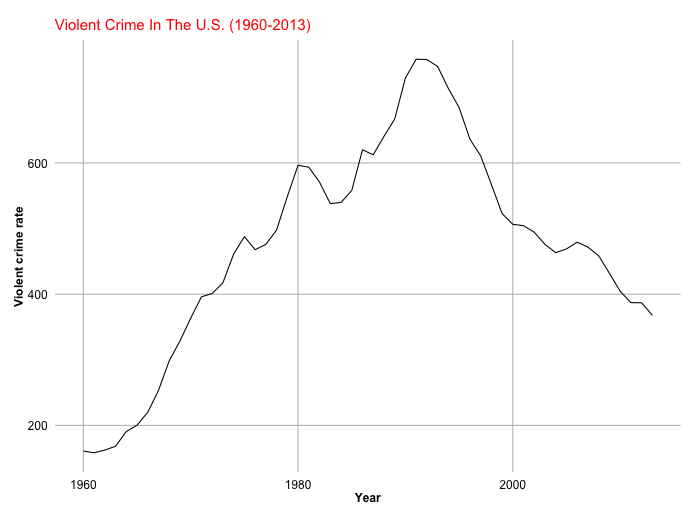
The paper discusses the crime wave of the 1990's. Statistical records show that violent crime increased steadily through the 1990's, at which point it fell. Prior to the decline of violent crime in 1991, the Chicago police had reported steadily increasing violence through homicides and gang violence. In some neighborhoods, reported crime was so intense that many cases went unsolved by the Chicago Police Department. Similar trends were being noticed around the country in other cities such as LA and New York.


As you can see from the graph, crime steeply declined after 1991. This decline was largely attributed to the use of incarceration, the growth of the police force, the improved policing strategies, the decline of the crack cocaine trade, the strong economy, and increased spending on security systems. Despite these possible explanations, these trends had been going on for over two decades in the areas affected. This is what Levitt and Donohue researched in their 2000 paper.

It is well-known that children born to low-income families incapable of sustaining them are more likely to go into a life of crime. Thus, Donohue and Levitt found that the decline in crime rates in the 1990's can be attributed to the lower number of children born to these low-income families. Children born in the early 1970's were of prime crime-committing age in the 1990's. Since following Roe v. Wade more children were aborted in these poor families, less children grew up to become criminals. Their evidence is further supported by the fact that states which legalized abortion shortly before Roe v. Wade saw a decline in crime before other states which followed the Supreme Court decision of 197.

This research provides an interesting perspective on the impact of legalized abortion in the United States, which can be applied to today's discussion of the issue. Despite their findings, they have also come under significant criticism from other researchers who refute their findings. Levitt and Donohue gained a lot of recognition and reputation for their provocative and enticing paper. More of Levitt's work can be found in his book, co-written with journalist Stephen Dubner, Freakonomics.


Sources:
http://www.nber.org/papers/w8004
http://www.nber.org/papers/w15098
https://www.brennancenter.org/blog/americas-faulty-perception-crime-rates
http://www.npr.org/2014/07/30/336468325/during-chicagos-1990s-crime-wave-a-rush-to-judgment

Ruben Rivers

Staff Sargent of the 761st Tank Division Ruben Rivers was one of only seven African-American men awarded a Medal of Honor from the Second World War. His sister was awarded the medal on his behalf in 1997 by then president, Bill Clinton, more than 50 years after his heroic actions and his death.
Staff Sargent Ruben Rivers in uniform

On November 16th, 1944 while trying to advance into Guebling, France, Rivers' tank ran over a landmine near the railroad crossing into the town. Rivers' leg was cut to the bone by shrapnel and he was given the order to evacuate but refused both that and morphine over the next few days. Rivers took command of another tank and kept his company advancing into and then taking Guebling on November 19th. Later the same day Rivers was killed while trying to draw enemy fire away from American infantry when his tank was hit and exploded killing everyone in it. Rivers' had decided to take his tank out into the open to cover the retreating ground troops sacrificing himself to save many men.
WWII tank similar to what Rivers commanded

Rivers was originally recommended for the Medal of Honor a day after his death on November 20th, 1944 for the Medal of Honor by Captain Williams for his heroic actions in Guebling, France. However, like many other African-American soldiers during the war, he was not recognized for his service and sacrifice at the time and did not receive his medal of honor until more than fifty years later. Grace Woodfork, one of Rivers' sisters was awarded his medal in his place along with six other African-American families by Bill Clinton in 1997.
Monument dedicated to Staff Sargent Rivers

Of the over four hundred medals of honor awarded to soldiers and their families for their heroic actions in the second world war, not a single one went to an African-American soldier or his family. George Watson, Charles L. Thomas, Willy F. James Jr, John R. Fox, Edward A. Carter Jr, and Vernon Baker were the other six African-American men awarded medals of honor for their service in WWII. Vernon Baker is the only veteran of the seven to receive the medal himself, all the other men were awarded their medals posthumously.
Vernon Baker receiving Medal of Honor from Bill Clinton in 1997

He is interred at the Lorraine American Cemetery in St. Avold, France.
Ruben Rivers' grave at Lorraine American Cemetery

Sources:
https://en.wikipedia.org/wiki/Ruben_Rivers
https://en.wikipedia.org/wiki/List_of_African-American_Medal_of_Honor_recipients
http://www.761st.com/j1/index.php/history/ssg-ruben-rivers
https://s3-us-west-2.amazonaws.com/find-a-grave-prod/photos/2011/196/10693715_131088417155.jpg
https://special-ops.org/wp-content/uploads/2016/02/Sgt.-Ruben-Rivers.jpg
https://blogger.googleusercontent.com/img/b/R29vZ2xl/AVvXsEjbkdu1gBnkFFYz6zfcIgVd2jZhsNdwF2SI7z_KIS43wQVWoeQImD5S-ZSg_yPTAs3ossnTXb69-0VxGd6NmfHZFvultBm9aTTwqvcDZnmT75arvwUesSaWyo4BusZUMoAPhMhaKE0mpsg/s1600/rive rs%2Bstatue.jpg
http://media.beliefnet.com/~/media/photos/inspiration/galleries/five-african-american-war-heroes/rubenrivers.jpg?h=318
https://static01.nyt.com/images/2010/07/15/us/15baker_190-2/15baker_190-2-popup.gif

Saturday, March 25, 2017

Abortion in the 1960s

As we have talked about in class, abortions have been a controversial topic even before modern day. One offshoot of the Women's Liberation Movement of the sixties was the issue of abortion.  Cases like Roe v. Wade allowed women to have more freedom and choices, but women still had to fight for their rights to control their bodies with things such as abortions and birth control pills.  Some people believed that, with these new opportunities to control themselves and plan their families, women would have too much power and would disrupt the way of life that was already establish, where the husband was the breadwinner and the wife was the homemaker.  Abortion was also antagonized for being immoral, as people argued that abortions killed babies and were not women's choice to do.  This graphic imagery was associated with the Women's Liberation Movement (even though the Women's Liberation Movement wasn't about that idea) and painted it as an immoral, zealous campaign.


However, the Women's Liberation Movement aside, abortions were still pursued even when stigmatized.  Those who needed one found ways to have it, even if it meant doing it in very unsafe, unsanitary, and in a lot of cases fatal methods.  Abortions still happened even when the law forbade it; people will find a way to get what they need despite what society says.  This brings up the question that we still argue about it today: If people get abortions, do we crack down on it more or legalize and regulate it? It's interesting to see how, almost fifty years later, we are still arguing about abortion.  Will there ever be an agreement, or will we continue to fight against each other for centuries to come?


Sources:
http://www.cnn.com/2016/06/23/health/abortion-history-in-united-states/
http://www.ourbodiesourselves.org/health-info/u-s-abortion-history/

My Lai Massacre

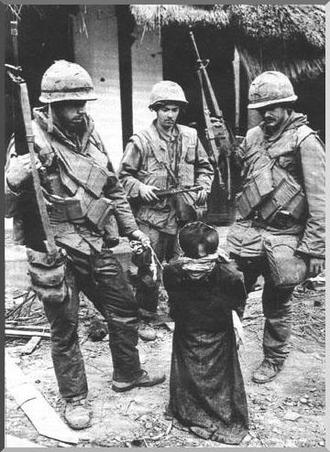
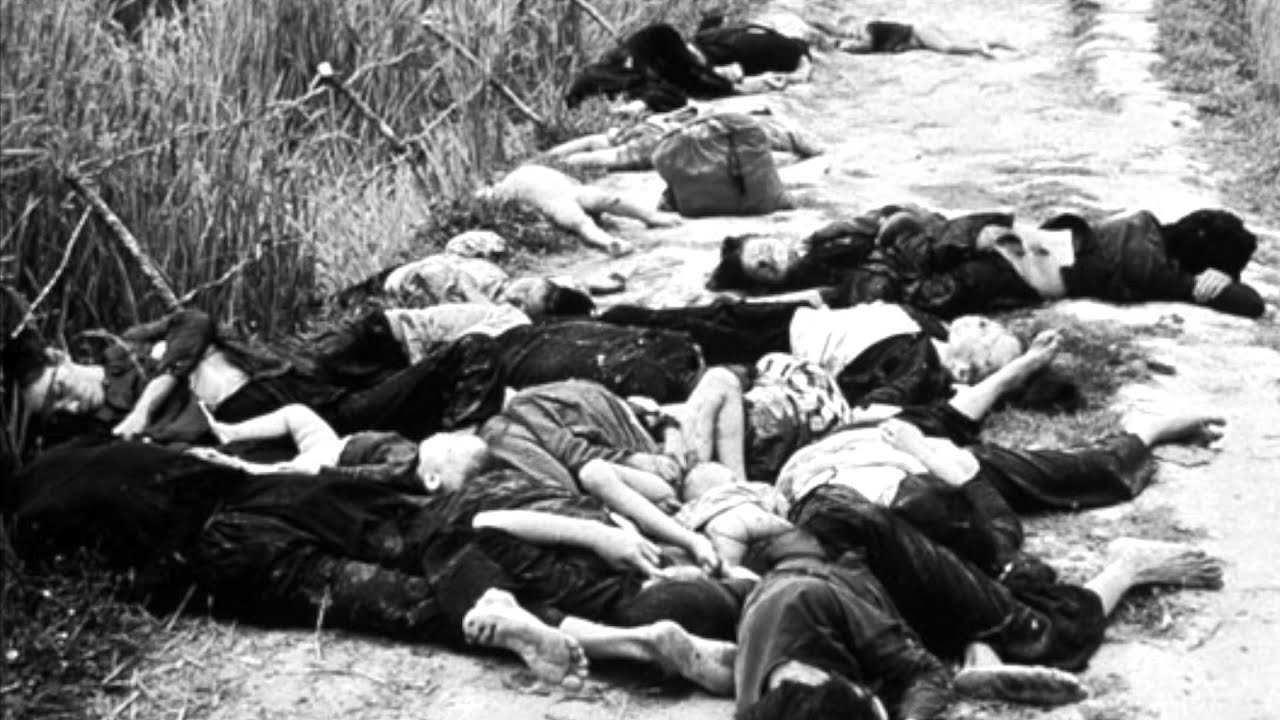
Thy My Lai Massacre was the killing of 504 civilians in South Vietnam by the US army on March 16, 1968 during the Vietnam War. When the incident was revealed to the public, the outrage accelerated the opposition to the US involvement in the Vietnam War. The massacre would go down as one of the largest massacres of civilians by US forces in the 20th century.

Charlie Company arrived in Vietnam, and, even though they had no direct enemy contact, had lost more than 40 men from mines within 3 months leading up to the massacre. Task Force Barker, which included Charlie Company in the 11th Brigade, was a search and destroy operation against the Viet Cong battalion in the area. This area included Son My village. Captain Ernest Medina of Charlie Company reported that any residents who did not leave for the market and still in the Son My village by 7 AM were Viet Cong sympathizers. Accounts recall Medina's orders to kill all combatants and suspects including women, children, and animals. He was quoted to say, "destroy everything walking, crawling, or growling."

                                            Image result for my lai massacre charlie company


When the operation began on the March 16th morning at 7:30 AM, villagers who had not left for the market were herded without alarm. Suddenly, the killings started. Women and children were executed while they were praying and crying. Large groups of villagers were lined up in an irrigation ditch and then were fired upon by M16s. Women shielded their children from the bullets but none were spared due to the suspicion of grenades hidden in their clothing. The village huts were set ablaze, catching the attention of helicopter pilot Hugh Thompson. He witnessed the massacres of unarmed civilians and managed to evacuate the few who were still alive in the ditches, mostly children. He reported to his company commander the horrors he saw, which would eventually lead to those involved to be charged with war crimes.

                                           Image result for my lai massacre

The My Lai massacre demonstrated the extent of the US army war crimes in the Vietnam War.

Source:
https://www.youtube.com/watch?v=tSKA_Ce4lBg
http://mylaimassacree.weebly.com/the-charlie-company.html
https://en.wikipedia.org/wiki/My_Lai_Massacre

Nixon's Life After the Presidency


Former President Richard Nixon with three other Former Presidents: Ronald Reagan, Jimmy Carter, and Gerald Ford.

On August 9, 1984 Richard Nixon officially resigned from office before this second term was up. The first President to do so, Nixon was an oddity, and his life after the Presidency was just as odd. In his later years, Nixon truly embodied what it meant to make a comeback.

Nixon received $200,000 of the $850,000 usual transition funds granted to a President. Nixon flew back with his wife to their former home in San Clemente California. Melancholy and dejected, Nixon spent many days alone with members of his decreasing staff. Due to the small transition funds, and  falling sick with phlebitis, Nixon would soon face financial problems that would trouble him.

Before that, however, many people in the public still wished to see the former President punished for his crimes. Nixon's successor Ford looked to pardon Nixon, and at first asked Nixon to publicly apologize in a statement of contrition. Nixon refused, believing he did nothing wrong, but Ford still granted Nixon a full pardon.

In 1975, Nixon returned to public life. Due to expenses on continuing legal battles and the fact that much of his transition fund had been depleted, Nixon at one point had only $500 in the bank. Hoping to get more financial stability, Nixon speeded his work on his memoir and began to sat down for interviews with hosts such as David Frost who paid him huge funds. He also sold property to continue to garner funds.

After Carter was elected, Nixon decided to travel. He was still welcomed with open arms in China, but in other parts of the world such as the United Kingdom, many officials refused to meet with him. Even at home, the Carter administration was at best lukewarm to Nixon and strayed away from him. For instance, Carter only invited Nixon to the white house after Chinese officials asked for his presence.

Nixon continued to remain unpopular at home, even being rejected by two Manhattan cooperatives when buying a new house. Abroad, however, Nixon looked to regain popularity. Traveling to all corners of the world, such as Iran for the funeral of the Shah and other Middle Eastern Nations along with former Soviet States, Nixon continued to rehabilitate his image. Soon later, after writing articles and publishing his memoirs, Nixon regained popularity though the 1980's.

Nixon died on April 22, 1994 from a stroke. Twenty years before he had been one of the most unpopular and politically toxic people due to Watergate, but at his funeral, five former presidents stood and paid their respects. Nixon had truly risen from the metaphorical ashes and regained much of the public's respect.


Reagan's Legacy


Former President Ronald Reagan is shown above. He was the 40th president and served from 1981 to 1989.

At the end of Ronald Reagan's Presidency in 1989, he hadn't accomplished much in the face of other American leaders such as Franklin D. Roosevelt or George Washington. His economic policies created huge speculation and caused job losses and harms to communities. He furthered economic instability while also widening the income gap between the poor and the rich. Moreover, his reputation at the time was tarnished by scandals such as the Iran-Contra affair. Nevertheless, today, Ronald Reagan is known as conservative hero, being mentioned hundreds of times during the last Republican Presidential Election. The question, however, remains: why?

While many Presidents gain greater popularity once they leave office, Reagan's jump is nothing but impressive. During his presidency, one in three people believed he should resign early, but after leaving office his popularity jumped a gigantic 11 percent. Historians have pointed out a few reasons for this jump:

1) First, Reagan was diagnosed with Alzheimers Disease after leaving office. As a result, many of his critics softened their tone and much of his legacy, which might have been scrutinized after he left office, was left in-tact.

2) Extremely old when took office, Reagan died soon after he left. Thus, he wasn't able to ruin or harm any of the reputation he had created in office.

3) Reagan's rhetoric was extremely different than his actions. Calling for many conservative policies such as tax cuts, smaller regulation, and social conservatism, Reagan was able to masterfully convince audiences of his dedication to these causes. While his actions may not have always been in line with these policies, politicians today instead refer to his rhetoric.

4) Republicans need a hero. While Democrats have had not only successful, but moreover game-changing Presidents such as Obama, Republicans need a former President to latch onto and to frame as the symbol of their party. Both of the Bushs's have low popularity and thus Reagan is the last president to be able to serve as this symbol.

Indeed, Reagan has and will continue to serve as the Republican Party's paragon of conservatism in the near and far future. He certainly has played a huge role in the last few elections. In 48 Republican debates, Reagan was mentioned more than five times as often as his democratic counterparts such as Kennedy and Roosevelt. 

Sources:
Give Me Liberty
http://www.cnbc.com/2015/10/05/when-did-republicans-become-obsessed-with-reagan.html