Showing posts with label Michael Vronsky. Show all posts

Sunday, April 23, 2017

NAFTA

NAFTA Secretariat Logo

The North American Free Trade Agreement (NAFTA) was signed by President Clinton in late 1993, and came into effect on January 1st 1994. The agreement was ratified by Canada and Mexico in December 1992. NAFTA's goal is to eliminate trading barriers between the three nations involved in it: Canada, Mexico, and the US. It did this by lowering tariffs, allowing for freer trade between the three nations.


One of the initial concerns for NAFTA was its environmental impact. Mexico's position as a developing country concerned many and led some to believe that the increase in trade between Mexico and the US and Canada would lead to pollution in those countries. To combat this concern, a side agreement, known as the North American Agreement on Environmental Cooperation (NAAEC) was signed, which eventually transformed into the Commission for Environmental Cooperation (CEC).

Another controversial aspect of the agreement was its section on agriculture. The agricultural agreements were negotiated separately between each pair of countries. The US-Canada agreement impose higher tariffs and stricter quotas than the US-Mexico agreement, which provided for greater liberalization.

In addition to some changes to intellectual property laws, NAFTA established the CANAMEX corridor. This was a series of improvements made to highways and railways in order to connect Canada and Mexico through the United States. This road connection solidifies NAFTA's feasibility and establishes a more convenient form for Mexico to trade with Canada.

Recently, NAFTA has come under criticism, with its opponents claiming that it has led to a loss of manufacturing jobs within the United States. Critics cite lower wages within the US and a destabilization of Mexico's rural industries. Nonetheless, as a result of NAFTA, trade between the member countries tripled, and foreign investments quadrupled. While it is hard to say definitively whether NAFTA has benefited the United States, current trends suggest that while it is an incomplete solution, it has provided valuable benefits for all member countries.
Image result for canamex corridor
The CANAMEX Trade Corridor (Red), stretching from Alaska to Mexico City

https://www.fas.usda.gov/topics/nafta
https://www.cbp.gov/trade/nafta
http://www.cec.org/about-us/NAAEC
http://www.canamex.org/
http://www.nytimes.com/2012/12/07/us/twenty-years-later-nafta-remains-a-source-of-tension.html

Friday, April 14, 2017

The Oslo Accords

U.S. involvement in the Israeli-Arab peace process and later the Israeli-Palestinian peace process has a long history. First in 1956, the US has intervened in the region in order to attempt to settle disputes (at times when convenient to its interests). In 1978, Israeli Prime Minister Menachem Begin and Egyptian President Anwar El Sadat signed the Camp David Accords, establishing a peace treaty between the two countries. President Jimmy Carter negotiated these agreements, and they were signed at Camp David in the United States (as their name suggests).

Image result
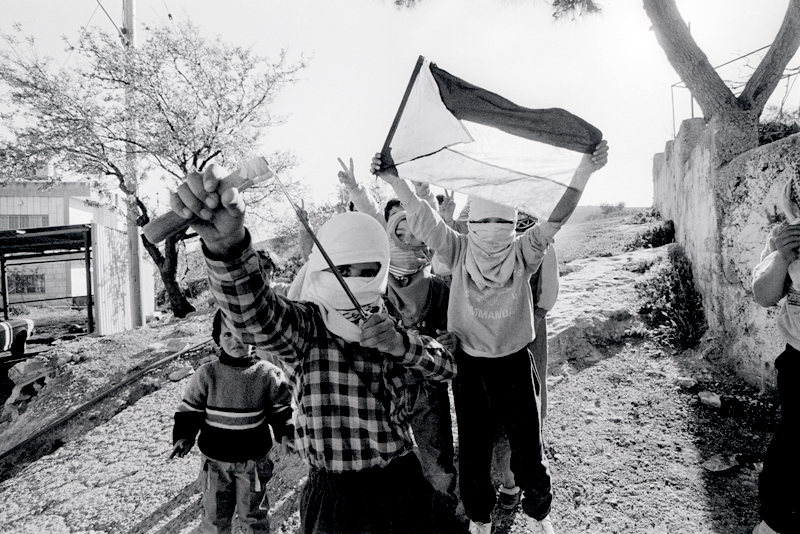
Palestinian youth during the First Intifadah
In 1987, the First Intifada broke out between Palestinians and Israelis. The Intifada (Arabic, roughly translated "uprising") was a series of actions taken against Israel by Palestinian organizations. It consisted of civil disobedience, boycotts of Israeli institutions in the West Bank and Gaza, refusal to pay taxes, vandalism, and stone-throwing. The Intifada also saw terrorist attacks carried out against Israelis, most notably a suicide attack involving an attacker who swerved a bus into a ravine, and a suicide bombing. The end of this conflict came through the Oslo Accords, signed in 1993, in which the US played a significant part.

President Clinton attempted to negotiate the Oslo Accords by following three facets: diplomacy, security, and economics. These also applied to other US-led Israeli peace initiatives during his term, including the restoration of embassies in Israel and Egypt and the Israel-Jordanian peace treaty in 1994. As part of the Oslo Accords, the US recognized the Palestinian Liberation Organization (PLO), and the Palestinian Authority (PA), which were now considered the official representatives of the Palestinian people in the International community. This action by the United States greatly improved the credibility of the agreement. The US also established an international donor mechanism in order to assist the Palestinian economy in its development which would ensure future self-reliance.
Image result for oslo accords
The signing of the Oslo I Accords
(Left: Rabin, Center: Clinton, Right: Arafat)

In order to ensure security, President Clinton worked with both Israel and the PA in order to improve the situation. He worked to convince PA president Yasser Arafat to combat militant factions within the PA (such as Hamas, which presently controls Gaza). With Israel, Clinton worked to ensure Israel's technological edge in the conflict in order to increase trust and confidence in the peace process.

Unfortunately, with the assassination of Israeli Prime Minster Itzchak Rabin, the Oslo peace process was set back significantly. The assassination was executed by a right-wing Israeli activist who opposed Rabin's involvement in the peace process. The U.S. has continued to advocate peace in the region, but has since not come as close to achieving it has it had at Oslo.
Image result for yitzhak rabin assassination
New York Times headline after Rabin's assasination
Sources:
http://www.huffingtonpost.com/ambassador-uri-savir/the-oslo-agreements_b_3920213.html
https://www.google.com/webhp?sourceid=chrome-instant&ion=1&espv=2&ie=UTF-8&safe=active&ssui=on#safe=active&q=itzhak+rabin
https://www.google.com/search?q=oslo+accords&oq=oslo+accords&aqs=chrome.0.69i59j69i57j69i60l4.2654j0j7&sourceid=chrome&ie=UTF-8&safe=active&ssui=on
https://www.britannica.com/topic/intifadah

Sunday, April 2, 2017

The Enron Scandal

Perhaps the most well-known collapse of any company in the late 20th century is the Enron Scandal. Enron Corp. was formed in 1985 as the result of a merger between Houston Natural Gas Co. and InterNorth Inc, based in Omaha. It was primarily an energy company, but its collapse had little to do with that market. Enron was able to grow rapidly in the 1990's, partly due to deregulation underway in many industries. Economic deregulation had been increasing in popularity ever since the Carter administration, and following the terms of Reagan and George H.W. Bush, lax government controls on business allowed Enron to flourish.

Enron rode on the dot-com boom of the 1990's, opening up Enron Online (EOL), an online website that allowed users to trade commodities. This expansion led to Enron being named "America's Most Innovative Company" by Fortune for six years between 1996 and 2001. EOL, however, was also the start of Enron's downfall. With the start of the 2000 recession, Enron found itself losing more and more money due to the stock market crash. In order to keep afloat, Enron utilized "mark-to-market accounting". Put simply, this meant that they measured the values of their assets in terms of their current market value, their historical value. For example, Enron would build a power plant, then claim the projected profits, long before those profits came in. While MTM accounting is not inherently fraudulent, Enron utilized it to cover up losses at its power plants.

Enron's fraudulent schemes didn't end with its crafty MTM accounting. Enron also utilized special purpose entities (SPEs) to hide debt from investors. These SPE's are also not inherently fraudulent, but Enron's use of them in order to hide their defecits was, and the entire scheme ultimately collapsed with the company.

After Enron's bankruptcy, they were found guilty of obstruction of justice after shredding important documents to keep them form the Securities and Exchange Commission (SEC). Enron's founder, Kenneth Lay, was convicted of six counts of fraud and conspiracy, in addition to four counts of bank fraud. He died of a heart attack shortly after. Former CEO Andrew Fastow was found guilty on two charges of wire fraud, and served a sentence of four years. Another former CEO, Jeffrey Skilling, received a 24-year sentence on similar grounds, which was later reduced by 10 years in 2013. He will be released in 2028.

As a consequence of the Enron Scandal, President George W. Bush signed the Sarbanes-Oxley Act, which protects investors from fraudulent business practices by corporations. It puts in place strict restrictions in order to prevent accounting fraud of the type that happened at Enron.


Sources:
http://www.investopedia.com/updates/enron-scandal-summary/
http://www.investopedia.com/terms/s/spv.asp
http://www.soxlaw.com/

Sunday, March 26, 2017

The Impact of Legalized Abortion on Crime

When considering the effects of the Supreme Court decision in the landmark case Roe v. Wade, analysis is typically focused on the period of time shortly following the decision, and the rising tide of new conservatism and the "Moral Majority". However, in November of 2000, a paper titled "The Impact of Legalized Abortion on Crime" was published by John Donohue and Steven Levitt. The paper outlined the lasting effects of the legalization of abortion in the United States, which are more far-reaching than one might imagine.

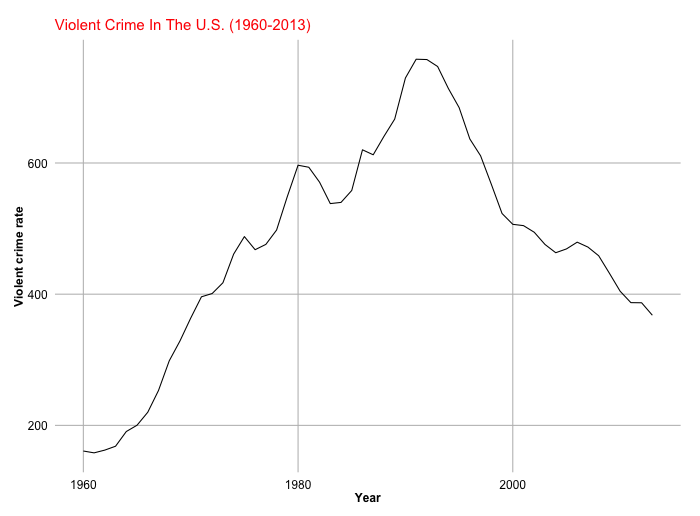
The paper discusses the crime wave of the 1990's. Statistical records show that violent crime increased steadily through the 1990's, at which point it fell. Prior to the decline of violent crime in 1991, the Chicago police had reported steadily increasing violence through homicides and gang violence. In some neighborhoods, reported crime was so intense that many cases went unsolved by the Chicago Police Department. Similar trends were being noticed around the country in other cities such as LA and New York.


As you can see from the graph, crime steeply declined after 1991. This decline was largely attributed to the use of incarceration, the growth of the police force, the improved policing strategies, the decline of the crack cocaine trade, the strong economy, and increased spending on security systems. Despite these possible explanations, these trends had been going on for over two decades in the areas affected. This is what Levitt and Donohue researched in their 2000 paper.

It is well-known that children born to low-income families incapable of sustaining them are more likely to go into a life of crime. Thus, Donohue and Levitt found that the decline in crime rates in the 1990's can be attributed to the lower number of children born to these low-income families. Children born in the early 1970's were of prime crime-committing age in the 1990's. Since following Roe v. Wade more children were aborted in these poor families, less children grew up to become criminals. Their evidence is further supported by the fact that states which legalized abortion shortly before Roe v. Wade saw a decline in crime before other states which followed the Supreme Court decision of 197.

This research provides an interesting perspective on the impact of legalized abortion in the United States, which can be applied to today's discussion of the issue. Despite their findings, they have also come under significant criticism from other researchers who refute their findings. Levitt and Donohue gained a lot of recognition and reputation for their provocative and enticing paper. More of Levitt's work can be found in his book, co-written with journalist Stephen Dubner, Freakonomics.


Sources:
http://www.nber.org/papers/w8004
http://www.nber.org/papers/w15098
https://www.brennancenter.org/blog/americas-faulty-perception-crime-rates
http://www.npr.org/2014/07/30/336468325/during-chicagos-1990s-crime-wave-a-rush-to-judgment

Monday, March 20, 2017

The Suez Canal: Tensions, Nationalization, and US Intervention

The Suez Crisis (AKA the Tripartite Aggression in the Arab world, or the Kadesh Operation or Sinai War in Israel) was a short conflict in 1956 lasting just nine days. The tensions in the region rose in July of 1956 following Egyptian president Gamal Abdel Nasser's nationalization of the Suez canal. Previously, under the Anglo-Egyptian Treaty of 1936, the canal was administered by the UK. The nationalization of the canal came about due to quite peculiar consequences.
Image result for gamal abdel nasser
Gamal Abdel Nasser (1918-1970)

The Egyptian revolution of 1952 (AKA the July 23 revolution) overthrew the Egyptian monarchy and ended British occupation of the country. In the midst of the Cold War, the question arose of which side Nasser would ally with. Portraying himself as a pan-Arab neutralist leader, the US saw Nasser as a possible leader of a capitalist Arab coalition that would reduce Soviet influence in the region. Following an attack on Egyptian soldiers by Israel near the border, Nasser felt the need to demonstrate his ability to defend Egypt in order to protect his credibility and influence in the region. Seeking to modernize his military, Nasser requested US aid. President Eisenhower offered Nasser weapons, but on the strict terms that American military personnel would supervise their use and training. Nasser rejected these terms, and instead turned to the USSR, signing an arms deal with Czechoslovakia (the middleman) in September of 1955.
Image result for high aswan dam
The High Aswan Dam

Still seeking to restrict communist influence in the Middle East (which would later become known as the Eisenhower Doctrine), the US, along with the UK, offered to pledge money for the construction of the High Aswan Dam. This dam would provide flood regulation, hydroelectricity, and irrigation capabilities, which would allow for Egypt to continue its industrialization process. American diplomats saw Nasser attempting to play them against the Soviets for financing of the dam, and withdrew funding offers in early 1956. At the time, the NSC claimed,"If they [the Soviets] do make this offer we can make a lot of use of it in propaganda within the satellite bloc. 'You don't get bread because you are being squeezed to build a dam.'" Despite this push, Allen Dulles, director of the CIA, saw to remove the US from the Dam's funding, as to avoid the impression that Nasser had bargained between the two superpowers.

Finally, Nasser nationalized the Suez Canal on July 26. Israel, Great Britain, and France soon launched an invasion of Egypt in order to regain control of the canal. The operation was successful despite some delays, but the Eisenhower administration took a moderate approach. Not wanting an escalation to war with the USSR (which had been supplying Egypt with arms through Czechoslovakia). Eisenhower urged Khrushchev to refrain from intervening and threatened to impose sanctions on Israel, the UK, and France if they were not to retreat. The UK and France retreated almost immediately, just nine short days after the first invasion. Israel occupied the Sinai peninsula until March, at which time it retreated.

Militarily, the coalition powers had been successful, and the US had succeeded in preventing an escalation with the Soviet Union. Despite this, the long-term consequences were not in the United States' favor. The retreat had strengthened Egyptian influence in the region, and solidified its ties to the Soviet Union. Despite being a founding member of the non-aligned movement, Nasser's Egypt continued to receive military support from the Soviet Union, which became significant in subsequent wars between Israel and the Arab world. For example, in 1970, Soviet pilots were pitted directly against Israeli pilots during the War of Attrition, during operation Rimon 20. Ultimately, the Suez Crisis constituted an important demonstration of the influence of the US and USSR in the Middle East, and created a climate between Israel, Arab powers, and the two major superpowers that would last for almost three decades.

http://www.jstor.org/stable/2145939?origin=crossref&seq=1#page_scan_tab_contents
http://www.jewishvirtuallibrary.org/gamal-abdel-nasser
https://www.jstor.org/stable/4283762
https://books.google.com/books?id=hQzKgNWtE4MC&printsec=frontcover&dq=isbn:0807856096&hl=en&sa=X&ved=0ahUKEwi_k7OFp-bSAhUFwiYKHUftCUQQ6AEIHDAA#v=onepage&q&f=false
http://www.aljazeera.com/focus/arabunity/2008/02/200852517304630655.html
http://www.history.com/topics/cold-war/suez-crisis
https://www.middleeastmonitor.com/wp-content/uploads/images/article_images/people/gamal-abdel-nasser.jpg
https://upload.wikimedia.org/wikipedia/commons/2/2e/BarragemAssu%C3%A3o.jpg

Sunday, March 12, 2017

Heroin Addiction in Vietnam

In 1971, two congressmen, Robert Steele and Morgan Murphy, discovered that many American soldiers had developed a heroin addiction. Later figures estimated that 40% of soldiers had tried the drug and some 20% became addicted. This led to the passage of executive order 11599, calling for the establishment of the Special Action Office of Drug Abuse Prevention. The immediate approach was to combine discipline with amnesty, subjecting addicts to court martial and possible dishonorable discharge. Those who sought help might be given amnesty, but this policy had little impact, and many soldiers continued using heroin. Perhaps the most surprising fact about drug addiction in Vietnam is what happened once the soldiers returned. 95% eliminated their addiction, which was very unusual, given that re-addiction rates were typically around 90%.

In an attempt to prevent addicts from returning to the United States, the government issued the operation unofficially named Operation Golden Flow. It consisted of mandatory urine drug tests for soldiers returning home, who were not permitted to return if they failed the test. The panic over drug addiction in Vietnam prompted research at Johns Hopkins, which found natural receptors for drugs such as heroin, codeine, and morphine.

Another key finding on drug addiction that came as a result of Vietnam was the impact of one's environment on addiction. In Vietnam, the harsh battle conditions and lack of normal civilian life proved itself to be a prime environment for heroin addiction.

http://jamesclear.com/heroin-habits
http://www.presidency.ucsb.edu/ws/?pid=106651
http://www.cnn.com/2015/12/21/health/vietnam-heroin-disrupting-addiction/

Sunday, February 26, 2017

Operation Paperclip

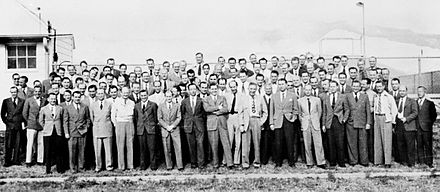
With the invention of the V-2 missile by Nazi Germany in World War II, it became clear that the world was headed in a new and unexplored direction in warfare and exploration. During the war, Nazi Germany became the nation at the forefront of rocket technology, and many of the world's most brilliant minds were working for the German government. Towards the end of the war, it became clear to the United States that these scientists were not to be lost to the Soviet Union in the post-war world.

Operation Paperclip was a secret operation to bring German scientists and engineers to the United States. In 1943, following the Battle of Stalingrad and the failure of Operation Barbarossa, Germany began to recall scientists from the front lines, and to begin preparing for a longer war by developing new weapons and production methods. During this recall, the Osenberg List was formed, consisting of the names of these scientists. The list was found in a toilet in 1945, and handed over to the Americans. The original plan was to interview only rocket scientists and attempt to persuade them to come to the US. Following a telegram that described the effort as "important for [the] Pacific war", "Operation Overcast" was launched, which was later to be renamed "Operation Paperclip".

Operation Paperclip was formally approved in 1946 by President Truman, and continued until as late as 1959. As one might guess, it was not without its controversy. Most scientists brought as part of the operation were members of the Nazi party, but a few were specially investigated for their more active involvement. Arthur Rudolph, a key rocket engineer, was investigated for war crimes in 1984 and agreed to leave the United States and renounce his citizenship in order to not be prosecuted. Hubertus Strughold, who was considered the "Father of Space Medicine" for his work on the physical and psychological effects of spaceflight on humans, was the subject of three investigations by the US government, and following his death it was confirmed that he was involved in human experimentation in Dachau.

Perhaps the most famous engineer brought to the US by Operation Paperclip was Wernher von Braun. Von Braun is credited as the inventor of the V-2 rocket and was one of the most prominent figures in early spaceflight. Following his move to the United States, he worked as a rocket scientists for NASA, helping design the first American rockets to go into space. He also served as the chief architect of the Saturn V rocket, which launched the Apollo missions.Image result for operation paperclip
Sources:
http://www.operationpaperclip.info/
https://www.cia.gov/library/center-for-the-study-of-intelligence/csi-publications/csi-studies/studies/vol-58-no-3/operation-paperclip-the-secret-intelligence-program-to-bring-nazi-scientists-to-america.html
http://www.jewishvirtuallibrary.org/operation-paperclip
http://www.biography.com/people/wernher-von-braun-9224912

Sunday, February 12, 2017

The Army-McCarthy Hearings

Joseph McCarthy, a US Senator from Wisconsin during the years from 1947-1957, has had an immense and infamous influence on the post-war years in the United States. "McCarthyism", as it came to be known, went after thousands of individuals on claims of communism, and created strong anti-red sentiment as it did opposition.

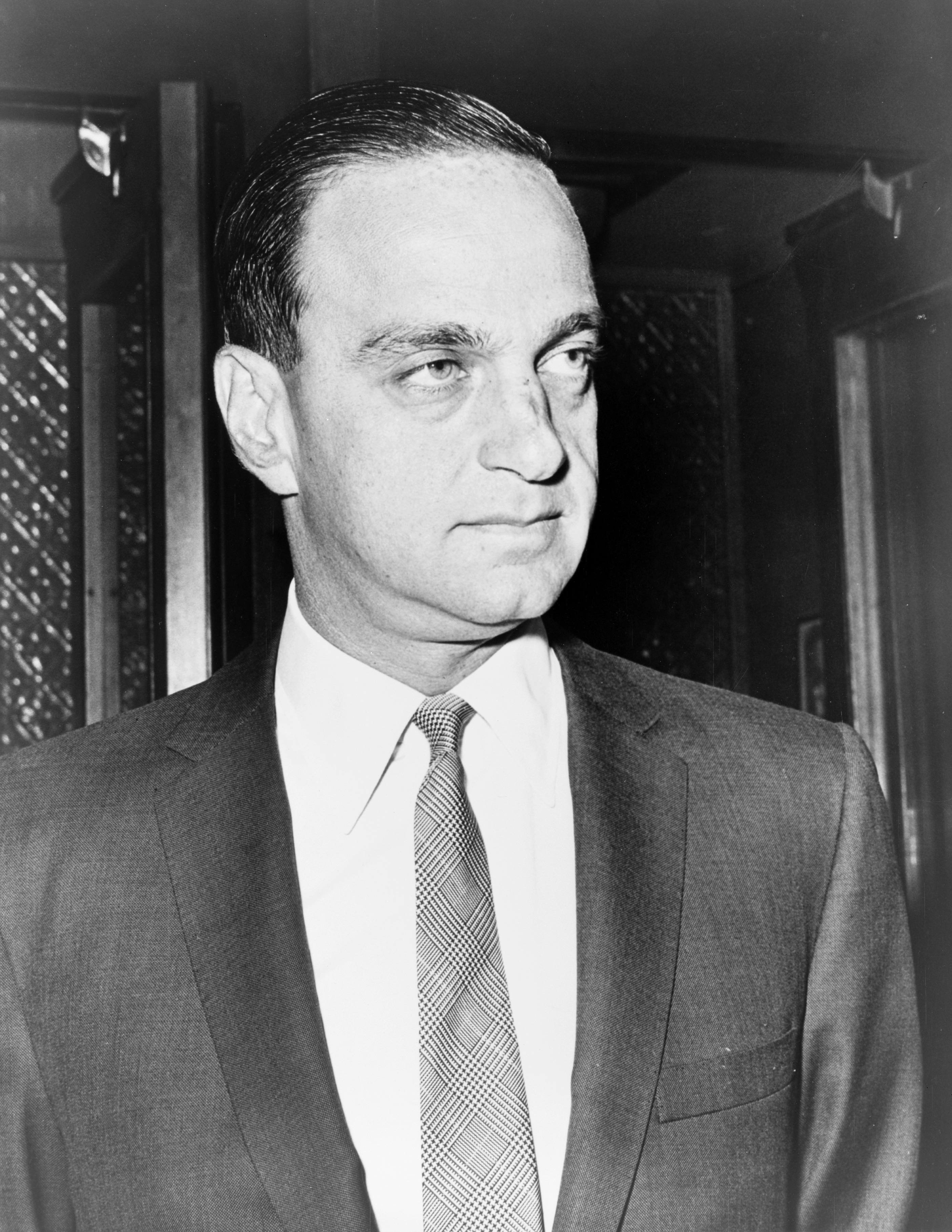
McCarthyism's downfall came primarily due to the Army-McCarthy hearings and the spread of television in American homes. The Army-McCarthy hearings centered around the Army's accusation that Roy Cohn (pictured here) had given preferential treatment to David Schine, a friend of Cohn and McCarthy.

Cohn had served as the prosecutor in the Rosenberg trials, and had produced the testimony from Ethel's brother, David Greenglass, that the Rosenbergs had been receiving classified documents. Cohn then moved on to working with McCarthy as his chief counsel. Interestingly, this was done in part to avoid accusations that McCarthy's investigations were anti-semitic in motivation. Coincidentally, Cohn served as Donald Trump's attorney for 13 years.

In order to counter the Army's accusations, McCarthy accused the Army of harboring a Communist infiltration in Fort Monmouth in New Jersey. Like many others of McCarthy's investigations, it came up largely fruitless in reality. Usually, McCarthy would act as the chariman for these inquiries. However, in this case, since he was being accused by the Army, South Dakota senator Karl Mundt reluctantly accepted the chairmanship of the subcommittee.

The hearings were televised by ABC and DuMont, and this ultimately led to McCarthy's downfall. The public, seeing the reckless nature of McCarthy's accusations sided with the Army, and McCarthy lost much of his popularity. An estimated 80 million people watched the hearings on television of the 36 days during which they were aired. McCarthy's approval ratings sank from 50% to just 34% over a matter of 6 months.

The committee concluded that McCarthy had done nothing wrong, but that Cohn had given preferential treatment to Schine on some occasions. It also warned of  "questionable behaviour" on the army's part. In reality, it is unknown what exactly was the nature of the relationship between Cohn, Schine, and McCarthy, but it is clear that some cooperation took place between the three.

Sources:

http://www.today.com/popculture/50-years-ago-tv-helped-end-mccarthyism-wbna5165583
https://www.nytimes.com/2016/06/21/us/politics/donald-trump-roy-cohn.html?_r=0
http://www.history.com/topics/cold-war/army-mccarthy-hearings
http://www.u-s-history.com/pages/h1769.html

Wednesday, December 7, 2016

The Civilian Conservation Corps

The Civilian Conservation Corps (CCC) is often mentioned when talking about the New Deal, but what exactly did it accomplish? The CCC was founded in 1933 during the "Hundred Days", and passed through Congress only a day after being submitted by President Roosevelt.

By 1933, CCC was made up primarily of young men ages 18-23 (250,000), but also had a sizable share of veterans (28,000) and American Indians (14,000). A separate division of the CCC was created for American Indians, the Indian Emergency Conservation Work (IECW). Despite this, the Democrat control of Congress ensured racial segregation in the CCC, meaning that whites and blacks did not work side by side. Many all-black CCC camps were created, and some camps in the North were integrated. This however, did not stop African Americans from enlisting in the CCC, and nearly 200,000 did so over the CCC's existence. By 1936, black enrollment reached 10%, a figure very close to the percentage of blacks in the total population. Most corpsmen stayed in the corps for 6-12 months. The primary goal of the CCC, as its name suggests, was the conservation of the environment. The organization planted close to 3 billion trees throughout the United States during its 10 year existence.

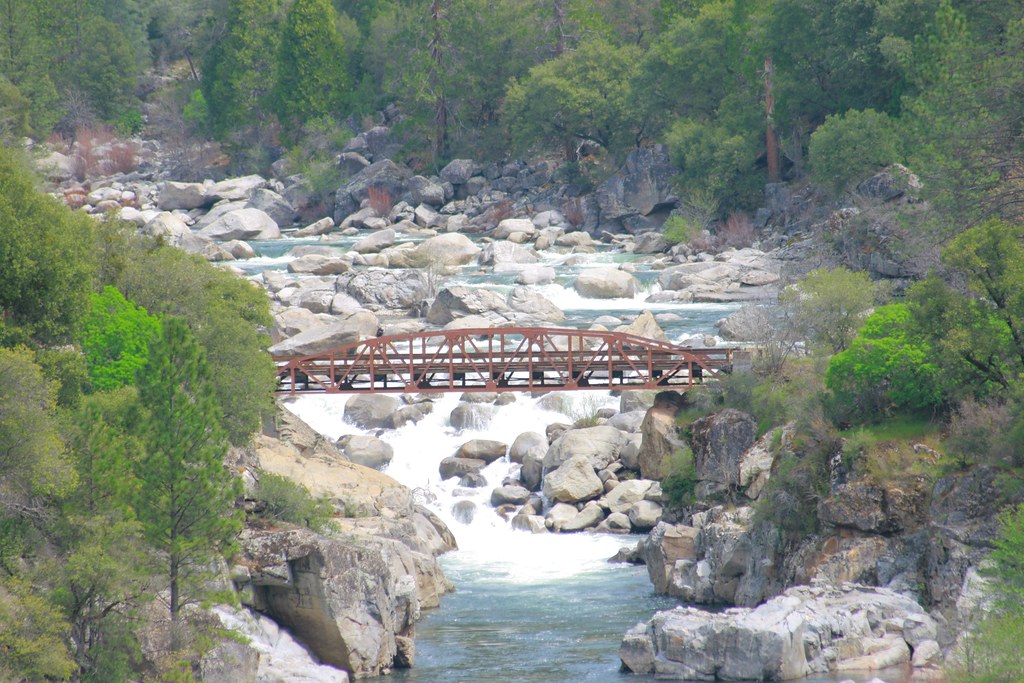
In California, the CCC built campground and created trails around Lake Tahoe. They also improved the Pinnacles National Monument grounds, and served as tour guides in the caves. The CCC's most significant contribution in California might be Sequoia National Park, where workers built 60 miles of road, created 200 campsites, and maintained the forest. Near Yosemite, the CCC build the Lumsden Bridge (pictured to the right), which still stands to this day

The CCC declined as a result of World War II. It was never a permanent program, and following the start of the draft in 1940 and American involvement in 1941, the CCC declined in favor of the war effort. The program was de-funded a year early in 1941. Following the official demise of the CCC, some camps remained open until 1947 and continued doing conservation work.

Sources:
http://www.history.com/topics/civilian-conservation-corps
http://www.ccclegacy.org/ccc_legacy.html
http://www.pbs.org/wgbh/americanexperience/features/map-widget/ccc-map/

Sunday, December 4, 2016

Century of Progress

Image result for century of progress
     In 1933, the World's Fair came to Chicago, and was dubbed the "Century of Progress International Exposition". The World's Fairs are a sequence of large public exhibitions that have been going on since 1851, and gained much popularity in the latter half of the 19th century and the early half of the 20th century.

     Chicago had previously hosted such an exhibition in 1893, the Columbian Exposition. The 1933 fair was created to celebrate the centennial anniversary of the incorporation of Chicago. Since the fair was held in the midst of the Great Depression, financing was an issue. The fair received no government funding, but the federal government did choose to build its own exhibition at the fair using federal dollars. Interestingly enough, planing and fundraising for the exhibition began mere months before the stock market crash, and construction continued through the worst phases of the Great Depression.This was possibly due to the sale of memberships, which could be exchanged for tickets the day the fair opened. The day before the stock market crashed, a $10M bond was issued this way. This marked the first time in American history at which a world's fair had returned its investments and made a profit.

Image result for century of progress     The architecture of the fair was uniquely modern. Architects such as Edward H. Bennett and Ralph T. Walker were involved in the design of sections of the fair, and chose to focus on streamlined, bright, architecture rather than the monochromatic designs of the 1893 fair. The fair seemed to promote the idea that cooperation between government, science, and business was the key to success in the future, a product of the decade preceding the fair, and perhaps a guideline for the New Deal which succeeded the fair. President Roosevelt was firmly in favor of the fair, and marveled at the private spending it helped induce. The fair was even re-opened half a year after its original closing date, and remained open for roughly half a year in 1934.

Image result for century of progress

     It is estimated that a total of approximately 48 million visitors visited the exposition. At the time, the population of the United States was approximately 126 million, and that of Chicago was roughly 3.5 million. The following year, the Brussels exposition generated about 20 million visitors. Up until now the fair remains the 5th most attended fair in history, behind the 1967 Montreal fair, the 1900 Paris International, the 1970 Expo in Osaka, Japan, and the 2010 Expo in China. It has also been the most popular American world's fair, beating out the New York 1939-1940 Exposition.


http://www.chicagohs.org/history/century.html
http://www.encyclopedia.chicagohistory.org/pages/225.html