Showing posts with label William Zeng. Show all posts

Sunday, November 6, 2016

Angel Island: A Symbol of Chinese Exclusion

"Gold Mountain." Thousands of Chinese immigrated to this land in search of gold and fortunes. The 1880 census counted over 100,000 Chinese in the US. The Chinese served as a source of cheap labor in the West: building railroads, clearing land, working in mining and agriculture. 

"The Chinese Exclusion Act." As the Chinese sought higher wages, and as the economy went on the downturn, society began to turn against the Chinese minority, labeling them as a "Yellow Peril." For example, in 1877, Indiana Senator Oliver P. Morton wrote that "if the Chinese in California were white people I do not believe that the complaints and warfare made against them would have existed," revealing the way race plays a factor in the way society functions to exclude minorities such as the Chinese. In 1882, the Chinese Exclusion Act was passed as a response to popular political pressure to prohibit entry to Chinese laborers. 

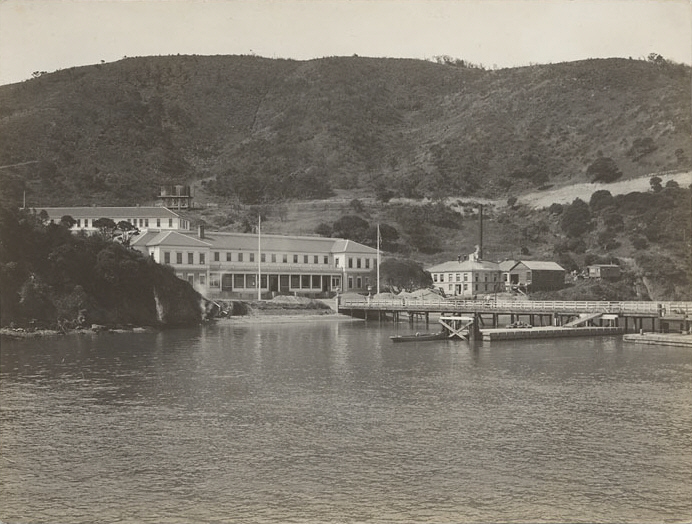
"Angel Island." As a result of the Chinese Exclusion Act, Angel Island Immigration Station, built on the largest island in the San Francisco Bay, opened its doors on 1910. Immigrants, the majority of which were Chinese, were subject to humiliating medical exams and grueling interrogation sessions that often lasted days.  
Angel Island emerges as a symbol of the oppression that the Chinese faced in the United States, and reveals a broader narrative of how US society resisted immigration, excluded minority cultures, and tried to maintain their racial purity.


US Imperialism Through Naval Power

The US has engaged in a strategy of imperialism ever since European colonists were originally sent over to this New World in the 17th Century. By the late 19th Century, however, American imperialism had evolved and exported itself around the world.

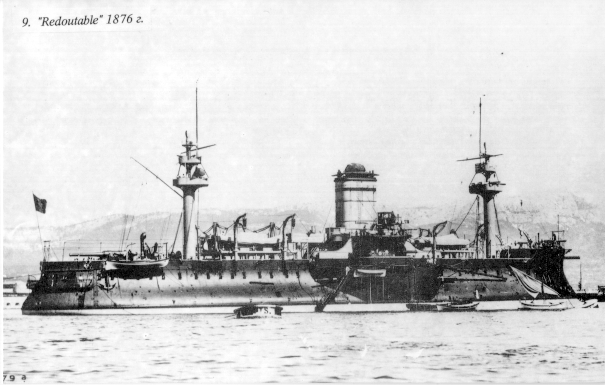
Militarily, the United States sought to control the seas in order to sustain a global empire. In 1890, Captain Alfred Thayer Mahan wrote The Influence of Sea Power upon History, claiming that controlling the seas through building defensive bases on islands in the ocean was necessary for an empire. A couple of excerpts from Mahan's book detail his reasoning as to how sea power serves as the crux of all imperial expansion:

"...in peace: The government by its policy can favor the natural growth of a people's industries and its tendencies to seek adventure and gain by way of the sea;” 

Mahan connects the military power of the navy to yet another motivation for imperialism -- the constant need for expansion. He claims that this policy would favor "the natural growth" of industries because of its tendencies to "gain by way of the sea."

"To avoid blockades of America, there must be a military force afloat that will at all times so endanger a blockading fleet that it can by no means keep its place. Then neutral ships, except those laden with contraband of war, can come and go freely, and maintain the commercial relations of the country with the world outside.”

Here, Mahan connects military power to an economic justification for imperialism. Specifically, "there must be a military force afloat" in order "to avoid blockades of America." The impact to this would be the maintaining of "commercial relations of the country with the world outside," a powerful economic reasoning behind US imperialism.

"The question is eminently one in which the influence of the government should make itself felt, to build up for the nation a navy which, if not capable of reaching distant countries, shall at least be able to keep clear the chief approaches to its own…It may safely be said that it is essential to the welfare of the whole country that the conditions of trade and commerce should remain, as far as possible, unaffected by an external war."

Finally, Mahan also touches upon "the influence of the government" and how the navy is "essential to the welfare of the whole country" by being able to protect the country from external wars and to maintain trade even in times of instability in the rest of the world. The power of this military influence brought on by the navy can be seen in the Spanish American War, where the American steel navy was able to utterly outclass Spain.

The call for a stronger navy arises as yet another extension of a new, globalized US imperialism. Mahan clearly justifies his reasoning for a stronger navy through talking about maintaining stronger economic relations with the rest of the world and encouraging further, natural expansion of industries into the ocean. This reflects the general attitude towards US imperialism during this time period.


Thursday, August 25, 2016

Why Does the American Form of Government Work?

"The two great points of difference between a democracy and a republic are: first, the delegation of the government, in the latter, to a small number of citizens elected by the rest; secondly, the greater number of citizens, and greater sphere of country, over which the latter may be extended. The effect of the first difference is, on the one hand, to refine and enlarge the public views, by passing them through the medium of a chosen body of citizens, whose wisdom may best discern the true interest of their country, and whose patriotism and love of justice will be least likely to sacrifice it to temporary or partial considerations. Under such a regulation, it may well happen that the public voice, pronounced by the representatives of the people, will be more consonant to the public good than if pronounced by the people themselves, convened for the purpose."

- Federalist Paper No. 10

Madison makes the argument for why the American form of government works by comparing it to a pure democracy. Essentially, he argues that a republic with a certain number of representatives is a preferable form of government because it allows for the greatest public good and is able to check back on any detriments that come with a traditional republic. First, Madison claims that a republic, where "a small number of citizens" are "elected by the rest", is able to "refine and enlarge the public views" by utilizing the representatives, "whose wisdom may best discern the true interest of their country." This republican form of government is able to make the best decisions for the country because it is not purely governed by the not-so-wise masses like a democracy, but instead, is more "refined" through the "wisdom" of elected representatives. These thoughts are later re-affirmed by Madison, who states that "the public voice, pronounced by the representatives of the people, will be more consonant to the public good than if pronounced by the people themselves." Once again, America's republican style of government is the most beneficial to the public good and preferable to pure democratic rule. Because the republican style of government is able to make the objectively best decisions through the wisdom of representatives, the American government is therefore able to flourish and "work."

"There are, moreover, two considerations particularly applicable to the federal system of America, which place that system in a very interesting point of view. First. In a single republic, all the power surrendered by the people is submitted to the administration of a single government; and the usurpations are guarded against by a division of the government into distinct and separate departments. In the compound republic of America, the power surrendered by the people is first divided between two distinct governments, and then the portion allotted to each subdivided among distinct and separate departments. Hence a double security arises to the rights of the people. The different governments will control each other, at the same time that each will be controlled by itself. Second. It is of great importance in a republic not only to guard the society against the oppression of its rulers, but to guard one part of the society against the injustice of the other part. Different interests necessarily exist in different classes of citizens. If a majority be united by a common interest, the rights of the minority will be insecure."

- Federalist Paper No. 51

Here, Madison details how the American republic has twice the amount of security as other republican governments and therefore, is even more effectively guarded against usurpation, oppression, and rights violations. Madison first outlines how "usurpations are guarded against by a division of the government into distinct and separate departments." Essentially, the republican government is divided into "separate" branches, which prevents power from being seized unilaterally. In America, however, this power division is furthered, by being "subdivided among distinct and separate departments." Hamilton summarizes this by claiming that "a double security arises to the rights of the people." Overall, the American form of government is able to rise above other republics by dividing the power amongst a greater number of departments within the government. This is therefore able to "guard the society against the oppression of its rulers" and "usurpation." Because the American form of government is able to more effectively guard against things that could easily topple a government, it is therefore able to actually function and "work."